I'd wind up for a smash, slow down at the last second for a drop shot, and watch it crash into the net. Every. Single. Time.
Or worse—I'd get it over the net but my opponent would be waiting there already because my preparation screamed "DROP SHOT COMING." Predictable and ineffective.
Took me three years to develop a drop shot that actually wins points. Here's what finally worked after watching countless YouTube videos and getting destroyed in matches.
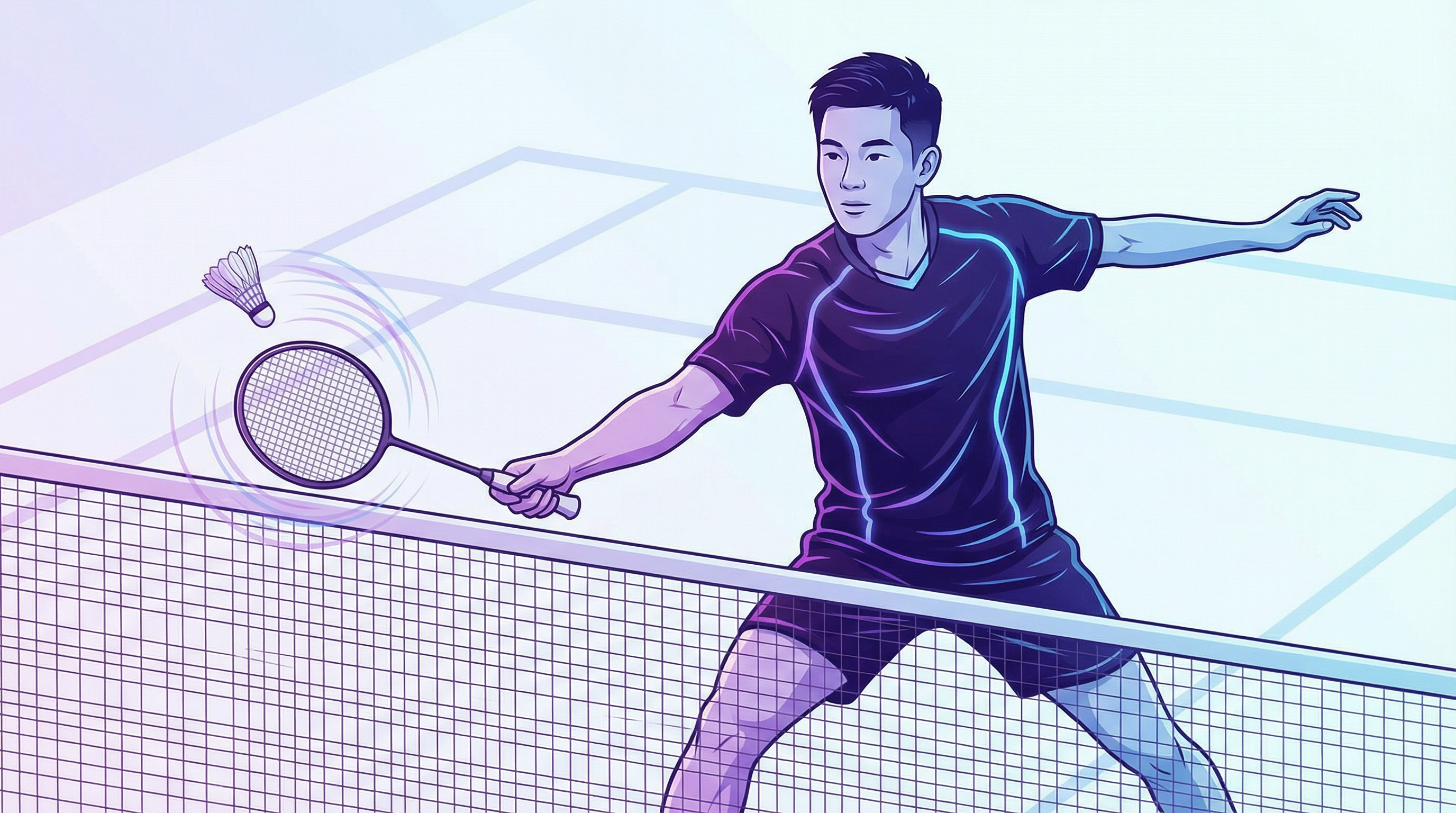
Why My Drop Shots Sucked (And Maybe Yours Do Too)
My first year, I'd try to "ease up" on my smash motion to hit a drop shot. Result? My opponent could read it from a mile away and would already be moving forward before I made contact.
The problem was simple: I didn't understand that drop shots are about DECEPTION first, placement second. If your opponent knows it's coming, even a perfect drop shot becomes defendable.
Once I learned to disguise it properly, my drop shot success rate went from maybe 30% to probably 70% within a couple months.
The Identical Preparation Rule
Here's what changed everything: my coach made me practice drop shots and smashes from the same position, and he had to guess which one was coming based on my preparation.
First session? He guessed correctly 9 out of 10 times. I was changing my grip, slowing my arm, dropping my elbow—all dead giveaways.
After a month of this drill, he could only guess right about 50% of the time. That's when my drop shot started working in matches.
What Identical Preparation Means
Same overhead position: Racket high behind head, just like a smash.
Same body rotation: Turn your shoulders and hips the same way. No half-turns.
Same weight transfer: Shift weight from back foot to front foot just like you would for power.
The deception happens in the last 0.1 seconds before contact—not in your preparation.
💡 What Actually Helped: I recorded myself on my phone hitting smashes and drop shots. Watched it back in slow motion. You can SEE the tells immediately when you watch yourself. Fixed mine in two weeks of conscious practice.
The Contact Point (This Is Critical)
I was hitting the shuttle behind my body or too low. That killed both power AND control. Couldn't generate deception when my contact point was wrong.
Now I contact the shuttle as far IN FRONT of my body as possible, at the highest point I can reach. Arm almost fully extended.
Early contact = more control, better angles, and you can still generate enough power to make it look threatening. Late contact = weak, obvious drop shots that hit the net.
The Wrist Slice Technique
For my first two years, I'd just "hit softer" for drop shots. Wrong approach. You need to SLICE the shuttle, not just tap it gently.
My technique now: Wind up exactly like a smash. At the last moment, I reduce wrist snap to about 20-30% and angle my racket face to brush/slice across the shuttle.
Think of it like putting backspin on a ping pong ball. You're carving under the shuttle, making it tumble over the net and die on landing.
The shuttle should clear the net by 6-12 inches (not too high, not too low), and land in the first 2 feet of the service box. If it bounces more than once before they reach it, that's a good drop shot.
⚠️ Mistake I Made: Practicing drop shots from a static position with perfect setup. In matches, you're often rushed, off-balance, or tired. Practice drop shots AFTER footwork drills, when you're fatigued. That's when you find out if your technique actually holds up.
Fast Drop vs Slow Drop
I didn't know these were different shots until year 3. Explained why some of my drop shots worked and others didn't.
Fast drop: Flatter trajectory, gets to the net faster but bounces higher. Use against slow opponents or when they're pushed deep.
Slow/slice drop: Steeper angle, more slice, shuttle dies on landing. Maximum deception, best for setting up net kills.
I use fast drops about 70% of the time in club play—they're more forgiving and still effective. Slow drops when I really need to create pressure or my opponent is anticipating fast shots.
When To Actually Use Your Drop Shot
Having a good drop shot technique means nothing if you use it at the wrong time. Here's when I use mine:
HIGH success situations: Opponent is pushed to the back line, after hitting 2-3 clears/smashes (they expect power), when I'm in the forecourt with time to prepare.
LOW success situations: Opponent is already moving forward, when I'm off-balance or late to the shuttle, against explosive players with great first-step speed.
I also NEVER drop shot three times in a row. Once opponents see two drop shots, they start anticipating it. Mix it back in with clears and smashes.
💡 Advanced Tactic: I use 2-3 smashes to establish a power pattern. Opponent starts loading weight backward to defend smashes. THEN I drop shot. Their weight is committed the wrong direction—nearly impossible to recover in time.
Practice Drills That Actually Worked
I tried a bunch of drills. These three delivered results:
Drill #1: Smash-Drop Alternation
Partner feeds high clears. I alternate smash, drop, smash, drop. Partner calls which shot they think is coming AS EARLY AS POSSIBLE.
Goal: They can't tell until contact. If they're calling it early, my preparation needs work.
Did this 20 minutes twice per week for a month. My disguise improved dramatically.
Drill #2: Target Practice
Place a towel in the front service box, 1-2 feet from the net. Hit 20 drop shots aiming for it.
Goal: 15/20 landing on or near the towel. When I started, I'd hit maybe 8/20. After two months, consistently hitting 16-17/20.
Drill #3: Fatigue Drop Shots
Do court sprints until I'm tired, THEN practice drop shots. Simulates match conditions when technique breaks down.
This showed me which parts of my technique were solid and which collapsed under pressure. Fixed those weak points specifically.
What Actually Matters
After 10+ years of playing, here's what I know: a predictable drop shot is worse than no drop shot at all.
If opponents know it's coming, they'll be at the net before the shuttle even crosses. Your perfect technique becomes useless because they're already in position.
Before I worked on disguise, I'd try drop shots and they'd get returned probably 70% of the time. Now? Maybe 30% get returned, and usually weakly. That shift came entirely from improving my preparation so opponents can't read me early.
Start with making your drop shot preparation look IDENTICAL to your smash. That's 80% of the battle right there. Then refine contact point, add the wrist slice, practice under pressure.
Give it 2-3 months of focused practice. Your drop shot won't look like a professional's, but it'll go from being a liability to being a legitimate weapon that forces opponents to respect the entire court.
← Back to All Articles